THURSDAY'S SCRIPT TIP:
GENRE PATTERNS
What makes a great thriller? How do you write a successful romantic comedy? What's
the trick to buddy action movies? When you're writing in a particular genre, how do you
know if you're following the "rules" of the genre? Should you follow the rules? Is there a
book that explains the rules? Can I get this book online for free?
If you are writing the kind of movies you pay to see, you already have a basic idea of
what the genre is all about. I love thrillers and action films, but I've seen enough Rom-coms to have a basic idea of how they work. If I took the time to study that genre, I
could learn what makes a Rom-com tick.
So that's your first step - Grab a stack of great films in the genre you love, watch them
and pay attention to how they work. I frequently time movies to get an idea of pacing
(and structure). I'll write up beat sheets for several films in the same genre and look for
patterns - basic things that happen in different films. Then I figure out WHY those things
happen, and that's where I learn something about storytelling for that genre.
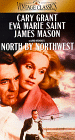
In my THRILLERS class on CD, I take NORTH BY NORTHWEST,
BREAKDOWN, THE LADY VANISHES and THREE DAYS OF THE CONDOR and
break all four down to look for patterns. I found a bunch of similarities - the elements
that make a good thriller. One thing I noticed was that between 20-25 minutes into each
film is a scene where the protagonist goes to the authorities. The authorities then
search for evidence of a crime, and not only find nothing - they find that what the
protagonist said is just plain wrong. They almost arrest the protagonist! (They DO
convict Roger Thornhill of drunk driving).
So the next question is why? Why do four different thrillers all have this type of scene at
almost the same time? The answers:
1) If the protagonist can go to the police, the story is over. So we need to get the police
out of the story as soon as possible.
2) We also need to keep the police out - so the hero has to look crazy. We need a
situation where the audience knows the protagonist won't be able to go to the
authorities for the rest of the movie (though part of the pattern is that they do - with
tragic results).
3) Thrillers separate the protagonist from society. The authorities represent society.
4) Thrillers throw the protagonist into a world of chaos, a world without order. Again -
the authorities represent order.
We need the protagonist to be "on his own" for Act Two, so this type of scene usually
takes place near the end of Act One... around page 20-25.
The REASON for the pattern is more important than the pattern. If you write a script by
patterns you end up with a cookie cutter script - we have the scenes but may not have
the reasons behind the scenes. It ends up arbitrary instead or organic to the story, the
motivations of characters and the effect on the audience. If you know the reason you
can find a different way to do the scene. But to know the reason, you have to do the
work yourself - you have to watch movies and really pay attention. You have to look at
how stories are told, and why they work better when told one way than when told
another. But, isn't that our job?
Watch a stack of films in your genre. Look for the patterns. Figure out the reasons for
the patterns. Use those reasons when creating YOUR screenplay.
MY BLOG!
SCRIPT SECRETS STORE - time to monkey around!
Can't wait to see DARK KNIGHT for the third time?
Did this new MUMMY movie almost make up for that awful SCORPION KING flick they put out a couple of years ago?
Is PINEAPPLE EXPRESS the coolest film you've seen all year?
Be heard:
Movie Discussion!
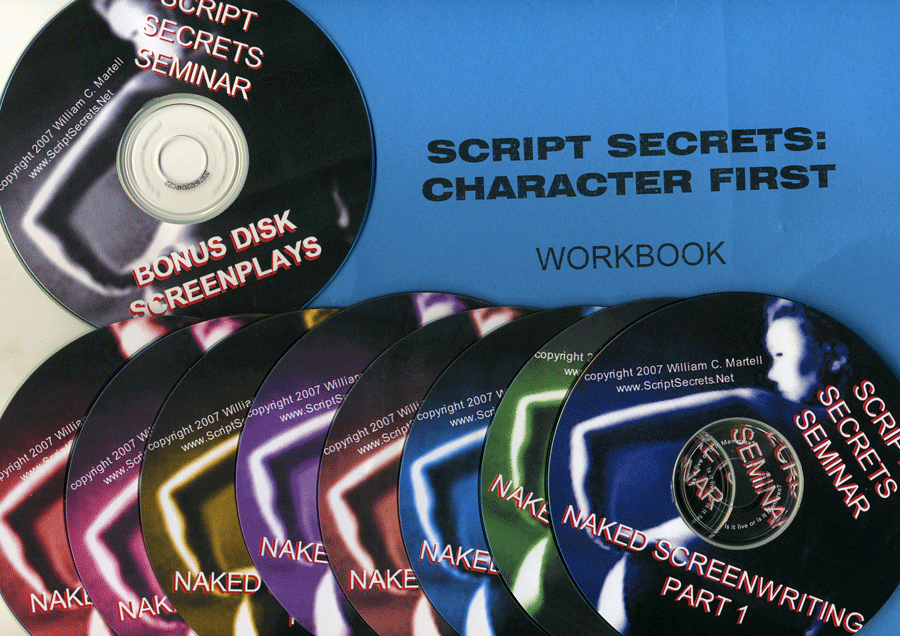
The NAKED SCREENWRITING CLASS!
The 2001 London Class on 8 CDs! Recorded *live* the morning after the Raindance Film Festival
wrapped. The two day class on 8 CDs, plus a workbook, plus a bonus CD with over 300 screenplay PDFs - all 3 BOURNE movies, all 3 MATRIX movies, all 3
Indiana Jones movies, plus all kinds of action and thriller and scripts from Hitchcock films.
Yeah, I threw in some Charlie Kauffman and rom-com scripts and some National Lampoon Vacation movie scripts,
too. Plus, an orginal brochure for the class. All for one reasonable price: $99.95.
(If you had taken the class in London it would have cost you $450... plus airfare, plus hotel, plus you'd have to eat "mushy peas" for dinner.)
For more information about
NAKED SCREENWRITING CLASS on CD - 8 CDs + Bonus CD with 300 scripts on PDF + Bonus DVD!
Makes a great Holiday Gift!


This is the program that I use. Very simple - I still haven't read the instruction book. When I first bought the program, I had sold a script and got an assignment - and decided to go from my macro to an actual screenwriting program. I went into The Writer's Store and asked for the easiest to use program they had, and that was MM. I started writing that assignment without ever reading the instruction book! One key stroke does *everything*. Automatically formats your script, putting character names, scene headings, and action in the appropriate places. It also has a character name list, so you only have to hit the first letter of any character's name and it automatically fills it in. The other great thing (at least for me) is that Movie Magic also makes the most used programs for budgeting and scheduling films - and all a producer has to do is import your script to the budgeting program! Makes it easier if your script is actually being produced. If you're looking for a screenwriting program, this is the one I recommend.
Buy It!