PURE EVIL
by William C. Martell

Forty years ago Universal Pictures released Orson Welles' classic
TOUCH OF EVIL, which director Paul Schrader called the last
authentic film noir. The picture was hailed by critics Francois
Truffaut and Jean Luc Godard, won the grand prize at the 1958
Brussels World Fair film festival, and made many "year's best"
lists. The New York Times review said, "Thanks to Orson Welles,
nobody, and we mean nobody, will nap during TOUCH OF EVIL. Just
try." Welles, who had been out of the Hollywood loop for almost
a decade, saw this film as his ticket back into the studio system
and was hoping to put together and five picture deal with
Universal.
Then the film flopped.
To quote screenwriter George Axelrod (about THE MANCHURIAN
CANDIDATE), "The film went from being a flop to a classic without
passing through success." TOUCH OF EVIL still makes best lists,
is the subject of the conversation that opens the movie THE
PLAYER, is discussed in GET SHORTY (a scene plays on TV), is the
film Welles is making in ED WOOD, and even gets a mention in
BASIC INSTINCT. I referenced it in my original script for Mark
Lester's THE BASE which opens in a sleazy border town. Director
Curtis Hanson (L.A. CONFIDENTIAL) says, "TOUCH OF EVIL has always
been my favorite of Orson Welles' films, as much for its
inhibited excesses as for its startling brilliance. Lurid,
flamboyantly exhibitionist, as palpably nasty as the murky waters
of the canal featured in its climax."
But the film we hail as a classic is not the film Orson Welles
made. Cut from 111 minutes down to 96 (including additional
scenes directed by Harry Keller) with a radically altered sound
track, the picture is little more than an echo of the cut Welles
delivered to the studio. Diluted Evil.
Welles was no stranger to studio recutting. His follow up to
CITIZEN KANE, the epic family saga THE MAGNIFICENT AMBERSONS
(based on the Booth Tarkington novel) was trimmed from 148
minutes to 88 minutes and released as the bottom half of a double
bill with a Lupe Velez "Mexican Spitfire" comedy. After seeing
Universal's cut of the TOUCH OF EVIL, he fired off a 58 page memo
to studio boss Edward Muhl suggesting improvements and explaining
reasons behind decision made in his original version. "He
understood the reality of the situation," says editor Walter
Murch, "which was that it was the studio's film, not his. In the
memo, he did his best to advise them about the content of the
film, suggesting ways to improve it. His comments were funny,
insightful..." and largely ignored by the studio.
Until now.
"It's so old it's new," cigar smoking saloon owner Marlene
Dietrich in TOUCH OF EVIL.

This week Universal Pictures will release the "director's cut" of
TOUCH OF EVIL forty years after the studio's butchered version
hit theaters. We can finally see this innovative masterwork in
its complete form. A wild, fever dream of a film that not only
holds up after all of these years, but continues to push the
limits of what film can do. More modern than most of today's
films, TOUCH OF EVIL is the kind of film David Lynch wishes he
could make. And the story of a corrupt bigoted cop who frames
suspects by planting evidence seems even more topical in today's
world of Mark Furman and the Rodney King incident.
"What happened was Universal asked me, 'If you could do a special
edition laser disk, what would you produce?' and I said I'd like
to do TOUCH OF EVIL," re-edit producer Rick Schmidlin explained
to me. "I thought the film should be re-examined, with notes and
documents and interviews with the surviving cast members about
what this film was supposed to be. And I was told very politely
that there was no market (for this disk). Every time I would have
lunch with the President of Universal Home Video over the course
of three years, I would ask 'When are you guys going to
greenlight the special edition of TOUCH OF EVIL for me?' About a
year ago I brought it up again, and he told me: 'I'm going into a
meeting tomorrow about Universal restoration, and I'm going to
ask about TOUCH OF EVIL. If you don't hear from me, I don't ever
want to hear about this project again." At two O'clock that
afternoon the phone rang. TOUCH OF EVIL would be Universal's
next restoration project.
A condensed form of Welles' original 58 page memo had been
published in the Fall 1992 issue of Film Quarterly, and had been
brought to Schmidlin's attention by cinematographer Allen Daviau
(E.T.). "I started off with the 58 page memo, I also had a 12
page memo that Welles had written after an August screening, and
a 9 page memo about sound design." Schmidlin also had access to
the original script, production notes, continuity reports, copies
of the editor's script and sound cue sheets.
"We found an original negative of the short version, and a good
print of the long version" in Universal's vaults. Using Welles'
notes, Schmidlin and Academy Award winning editor Walter Murch
made over fifty changes, restoring the film to reflect Welles'
original vision.
"She doesn't look Mexican," Welles describing Leigh in TOUCH
OF EVIL.

In 1956 the temperamental Welles had been banished from the
studio system and was making independent films before there was
such a thing. His current production DON QUIXOTE had just run
out of money, so he went to Hollywood to find an acting job and
was cast as a corrupt cop opposite Charlton Heston in the low
budget film version of Whit (WARNING SHOT) Masterson's novel
BADGE OF EVIL. Heston, suddenly hot off THE TEN COMMANDMENTS,
reminded the studio that Welles was a pretty good director, and
suggested they hire him to helm the film. B movie producer
Albert Zugsmith (HIGH SCHOOL CONFIDENTIAL, TEACHER WAS A SEXPOT)
took the star's advice and signed Welles to direct.
"Orson never did anything ordinary," Janet Leigh told me, "he only
did things extraordinary."
The first extraordinary thing Welles did was to rewrite the
standard L.A. cop drama into an edgy, sexy and dangerous border
town thriller. The American detective lead role was changed to a
Mexican narcotics investigator with a blonde American wife. "In
the original script, which Welles rewrote entirely, the Attorney
was American," Heston says. Two other racially mixed couples
were added to the script. The weird, expressionistic story now
takes place in a nightmare world: dark, evil, corrupt... so
strong you can smell the raw sewage in the canal behind the
shanty town filled with hookers and low level mobsters.
"I want to see all the strip teasers in the joint," Orson
Welles in TOUCH OF EVIL.

Welles other major contribution to the script was to push
sexuality on film far past the boundaries permissible in the
1950s... in fact, the film plays as hot as any of today's more
racy soap operas. Heston and Leigh are on their honeymoon when
they witness the murder of a wealthy contractor and his stripper
girlfriend. Instead of spending the weekend in bed (as they had
clearly planned) the murder investigation separates the hot
young couple. Though censors at the time forbid showing married
couples in the same bed, Welles gets around this by showing a
sexy lingerie clad Janet Leigh laying in bed having 'phone sex'
with Heston. To add to the perverseness of the scene, Heston is
on a store's public phone with a blind woman only a few feet away
listening to his every word and smiling. Kinky.
The murder victim's daughter is shacking up with a Mexican gigolo
who admits to only sleeping with her for the money, Welles'
corrupt cop once had a long term affair with the madam at a whore
house, there is a bull-dyke girl played by Mercedes McCambridge
(THE EXORCIST) who wants to stay and watch a gang-bang, and of
course the above mentioned strip teasers who seem to spend as
much time walking around the club in lingerie as dancing.
The film was shot on a budget of only $829,000 on location in
Venice, California and a motel up by Lancaster, California,
brought in on time and on budget.
"Your future is all used up," Dietrich to Orson Welles in
TOUCH OF EVIL.

1950s America was probably unprepared for this much in-your-face
sexuality. They were definitely unprepared for the dark, twisted
tone of the film. The voice over on the original 1958 trailer
for the film warns, "Only the offbeat, creative, original
creative powers of Orson Welles could bring you so different a
drama."
It's hard to blame Universal for re-editing the film and then
dumping it on the market with little fanfare. "It really didn't
get any release, it didn't get any press coverage, they didn't
push it," Heston said. Expecting to get a standard B movie cop
drama, they ended up with something entirely different. "TOUCH
OF EVIL smacks of brilliance but ultimately flounders in it,"
Variety said in their original review. "The Universal release
falls in no category - it's not a 'big' picture nor is it in the
exploitation class."
"Welles wanted to make a movie that would attract teenagers and
cinephiles alike," Schmidlin said. "He wanted the couple with
the pick up truck going to the Drive In in Texas and he wanted
Jean Luc Godard and Francios Truffaut. He wanted to make a film
that was going to please everybody, and I think that's what
really hurt him ultimately is that it did not please the powers
that be at Universal.
Orson Welles never directed another Hollywood film. His five
picture deal was over before it began.
"I didn't recognize you... you ought to lay off those candy
bars," Dietrich to Welles in TOUCH OF EVIL.

The re-cut version may be fifteen minutes longer, but none of it
is fat. One of the major changes the studio made in the short
version was to remove the film's cross-cutting between parallel
stories, creating LONGER scenes and slowing down the pace of the
film.
From Welles' memo: "The scene between Grandi and Susan is a
thousand percent more effect played as it was first arraigned, in
two parts, with a cut away to the (concurrent action) scene of
the explosion between the two parts."
"There were about 50 changes between sound and visual," Schmidlin
explained to me. The most startling difference in the rec-cut version is
the legendary three minute opening tracking shot. In the 96
minute version, the studio obscured the images by using it as a
title sequence.
"We had a textless opening that I had heard existed," Schmidlin
says. "The reason the textless opening existed was because
Universal in the 1950s released films to Europe, and would change
the opening titles to French, Italian, or German. The opening
shot was crucial because we had to remove not only the credits
but the Henry Mancini sound track," Schmidlin explains.
From Welles' memo: "As the camera moves through the streets of
the Mexican border town, our plan was to feature a succession of
different and contrasting Latin-American musical numbers the
effect of passing from one cabaret orchestra to the next, each
blasting it's own come-on for the tourists."
The re-cut version removes Mancini's score from this three minute
shot to make room four source music. Another interesting change
in the new version is the use of more realistic sound. Welles
noted in his memo that music from the speakers in the motel
"should sound as bad as it would in real life" instead of the
crisp, clean, studio recording. This concept in sound design,
called Worldizing by its creator Walter Murch, was twenty years
ahead of its time. "I thought I'd done it first," said Murch,
"but Orson Welles had thought of it years before!" Ironic that
Murch had been chosen as editor and sound designer for the re-cut
version.
"Hold her legs!" Valentin De Vargas organizes a gang bang in
TOUCH OF EVIL.

"How can a B picture be made with Charlton Heston, Janet Leigh,
Akim Tamiroff, Marlene Dietrich, Dennis Weaver, Joseph Calleia,
shot by Russell Metty who went on to do SPARTICUS, Foley actually
did the foley on this picture, written and directed by Orson
Welles?" Schmidlin asks. "The studio didn't know what they had.
They thought they had a B picture... it was NOT a B picture.
Orson Welles was ahead of his time."
Editor Walter Murch says, "The film now moves more smoothly,
forcefully and clearly in the direction it was originally headed
before the studio intervened."
"It not only plays beautifully, but looks and sounds the way the
master himself wanted," Schmidlin concludes, "which is what
people really want - to see Orson Welles' work as he'd planned
it. It's an historic event."
Pure evil has finally been restored.
...FADE OUT
TOUCH OF EVIL - my review for Independent Film Channel Magazine.
My Gary Graver (Welles DP) Obit
BRAND NEW!
DESCRIPTION & VOICE Blue Book!
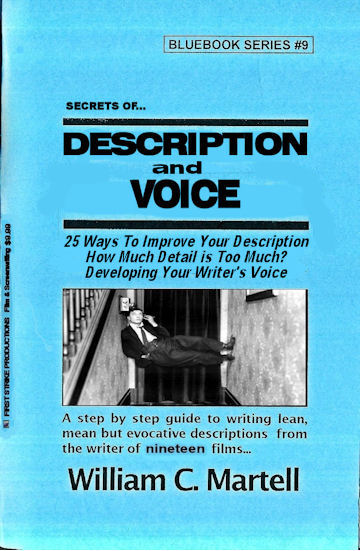
DESCRIPTION & VOICE Blue Book.
IS HALF OF YOUR STORY IN TROUBLE?
Most screenplays are about a 50/50 split between dialogue and description - which means your description is just as important as your dialogue. It just gets less press because the audience never sees it, the same reason why screenwriters get less press than movie stars. But your story will never get to the audience until readers and development executives read your script... so it is a very important factor. Until the movie is made the screenplay is the movie and must be just as exciting as the movie. So how do you make your screenplay exciting to read? Description is important in a novel as well, and the “audience” does read it... how do we write riveting description?
Now Only $4.99
Tip FAQ

My New Script Secrets Newsletter!

NOW AVAILABLE!
NEW AND HOT!
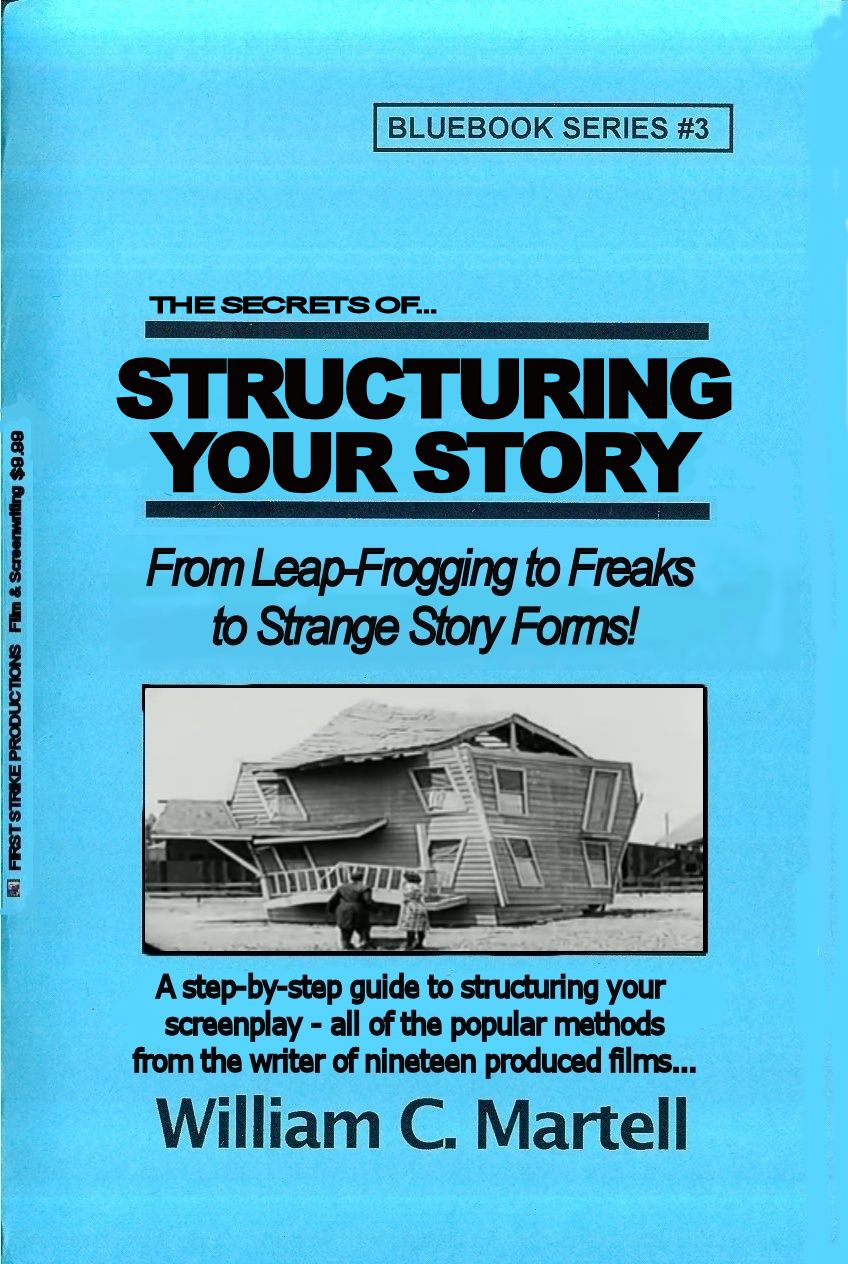
*** STRUCTURING YOUR STORY *** - For Kindle!
William Goldman says the most important single element of any screenplay is structure. It’s the skeleton under the flesh and blood of your story. Without it, you have a spineless, formless, mess... a slug! How do you make sure your structure is strong enough to support your story? How do you prevent your story from becoming a slug? This Blue Book explores different types of popular structures from the basic three act structure to more obscure methods like leap-frogging. We also look at structure as a verb as well as a noun, and techniques for structuring your story for maximum emotional impact. Most of the other books just look at *structure* and ignore the art of *structuring* your story. Techniques to make your story a page turner... instead of a slug!
Only $4.99 - and no postage!
LEARN SUSPENSE FROM THE MASTER!
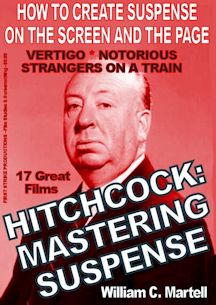
*** HITCHCOCK: MASTERING SUSPENSE *** - For Kindle!
Alfred Hitchcock, who directed 52 movies, was known as the *Master Of Suspense*; but what exactly is suspense and how can *we* master it? How does suspense work? How can *we* create “Hitchcockian” suspense scenes in our screenplays, novels, stories and films?
This book uses seventeen of Hitchcock’s films to show the difference between suspense and surprise, how to use “focus objects” to create suspense, the 20 iconic suspense scenes and situations, how plot twists work, using secrets for suspense, how to use Dread (the cousin of suspense) in horror stories, and dozens of other amazing storytelling lessons. From classics like “Strangers On A Train” and “The Birds” and “Vertigo” and “To Catch A Thief” to older films from the British period like “The 39 Steps” and “The Man Who Knew Too Much” to his hits from the silent era like “The Lodger” (about Jack The Ripper), we’ll look at all of the techniques to create suspense!
Only $5.99

BRAND SPANKIN' NEW!
*** THE BOURNE MOVIES
All five "Bourne" movies (including "Legacy" and it's potential sequels) - what are the techniques used to keep the characters and scenes exciting and involving? Reinventing the thriller genre...
or following the "formula"? Five films - each with an interesting experiment! A detailed analysis of each
of the films, the way these thrillers work... as well as a complete list of box office and critical
statistics for each film. This book is great for writers, directors, and just fans of the series.
Only $3.99 - and no postage!
NO KINDLE REQUIRED! Get the *free* app (any device, except your Mr. Coffee) on the order page on Amazon!

Strange Structures!
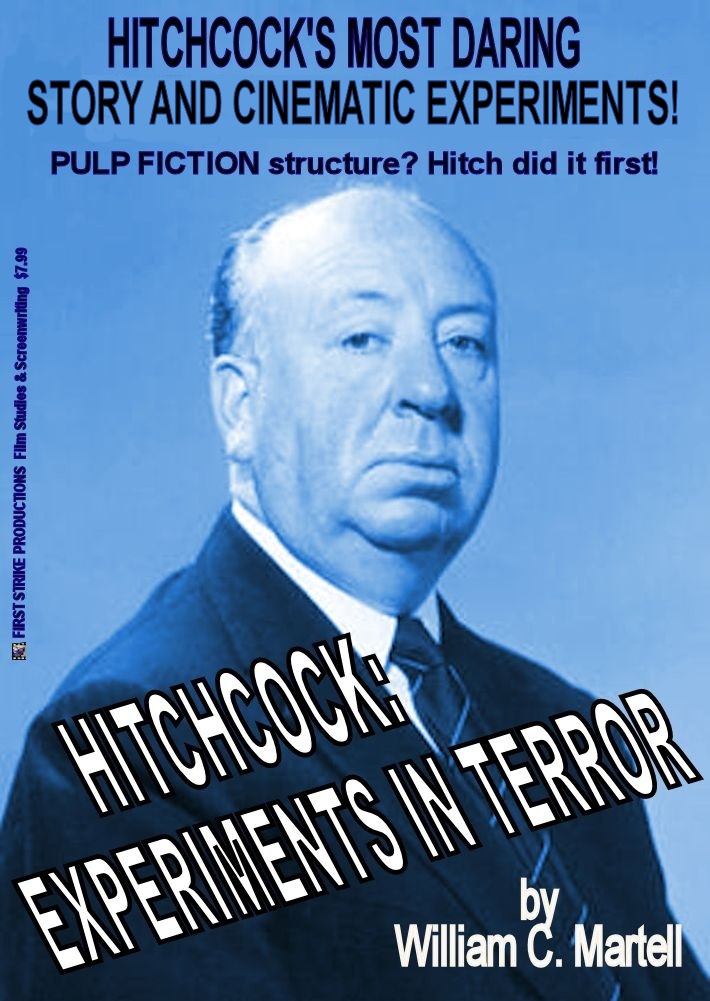
*** HITCHCOCK: EXPERIMENTS IN TERROR! *** - For Kindle!
***
Contained Thrillers like "Buried"? Serial Protagonists like "Place Beyond The Pines"? Multiple Connecting Stories like "Pulp Fiction"? Same Story Multiple Times like "Run, Lola, Run"?
HITCHCOCK DID IT FIRST!
This book focuses on 18 of Hitchcock's 52 films with wild cinema and story experiments which paved the way for modern films. Almost one hundred different experiments that you may think are recent cinema or story inventions... but some date back to Hitchcock's *silent* films! We'll examine these experiments and how they work. Great for film makers, screenwriters, film fans, producers and directors.
Only $5.99 - and no postage!
GOT IDEAS?
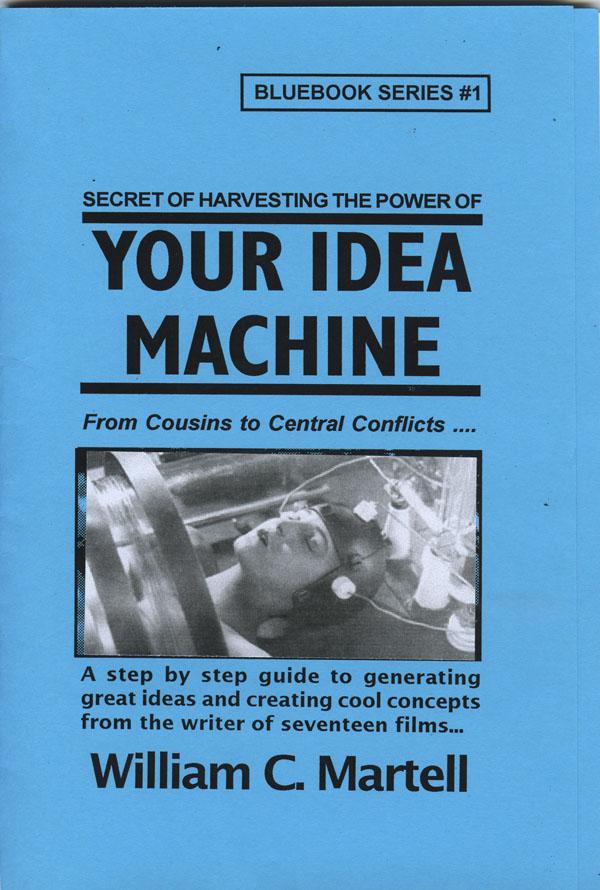
*** YOUR IDEA MACHINE *** - For Kindle!
*** YOUR IDEA MACHINE *** - For Nook!
Expanded version with more ways to find great ideas! Your screenplay is going to begin with an idea. There are good ideas and bad ideas and commercial ideas and personal ideas. But where do you find ideas in the first place? This handbook explores different methods for finding or generating ideas, and combining those ideas into concepts that sell. The Idea Bank, Fifteen Places To Find Ideas, Good Ideas And Bad Ideas, Ideas From Locations And Elements, Keeping Track Of Your Ideas, Idea Theft - What Can You Do? Weird Ways To Connect Ideas, Combing Ideas To Create Concepts, High Concepts - What Are They? Creating The Killer Concept, Substitution - Lion Tamers & Hitmen, Creating Blockbuster Concepts, Magnification And The Matrix, Conflict Within Concept, Concepts With Visual Conflict, Avoiding Episodic Concepts, much more! Print version is 48 pages, Kindle version is over 175 pages!
Only $4.99 - and no postage!

BRAND NEW!
*** HOOK 'EM IN TEN *** - For Kindle!
Your story doesn't get a second chance to make a great first impression, and this book shows you a
bunch of techniques on how to do that. From the 12 Basic Ways To Begin Your Story, to the 3 Stars Of
Your First Scene (at least one must be present) to World Building, Title Crawls, Backstory, Starting
Late, Teasers and Pre Title Sequences, Establishing Theme & Motifs (using GODFATHER PART 2), Five Critical
Elements, Setting Up The Rest Of The Story (with GODFATHER), and much more! With hundreds of examples
ranging from Oscar winners to classic films like CASABLANCA to some of my produced films (because
I know exactly why I wrote the scripts that way). Biggest Blue Book yet!
Print version was 48 pages, Kindle version is over 100,000 words - 312 pages!
Only $4.99 - and no postage!

WHAT IS A SCENE?
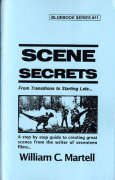
*** SCENE SECRETS *** - For Kindle!
***
What is a scene and how many you will need? The difference between scenes and sluglines. Put your scenes on trial for their lives! Using "Jaws" we'll look at beats within a scene. Scene DNA. Creating set pieces and high concept scenes. A famous director talks about creating memorable scenes. 12 ways to create new scenes. Creating unexpected scenes. Use dramatic tension to supercharge your scenes. Plants and payoffs in scenes. Plus transitions and buttons and the all important "flow"... and more! Over 65,000 words! Print version was 48 pages, Kindle version is around 210 pages!
Only $4.99 - and no postage!
DO YOU WRITE PICTURES?
*** VISUAL STORYTELLING *** - For Kindle! (exclusive)
Show Don't Tell - but *how* do you do that? Here are techniques to tell stories visually! Using Oscar Winning Films and Oscar Nominated Films as our primary examples: from the first Best Picture Winner "Sunrise" (1927) to the Oscar Nominated "The Artist" (which takes place in 1927) with stops along the way Pixar's "Up" and Best Original Screenplay Winner "Breaking Away" (a small indie style drama - told visually) as well as "Witness" and other Oscar Winners as examples... plus RISE OF THE PLANET OF THE APES. Print version is 48 pages, Kindle version is over 200 pages!
Only $4.99 - and no postage!
GREAT SUPPORTING CHARACTERS!
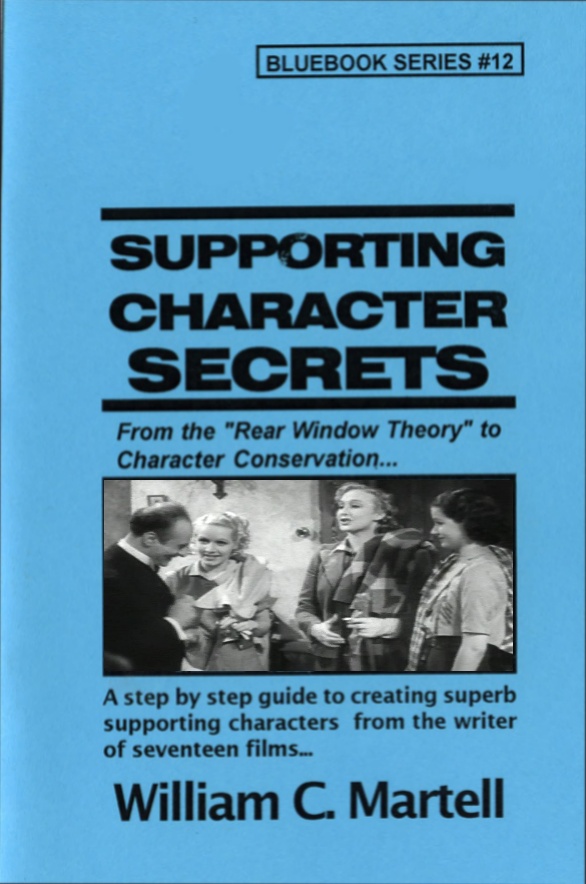
*** SUPPORTING CHARACTER SECRETS *** - For Kindle! (Exclusive)
Expanded version with more techniques to flesh out your Supporting Characters and make them individuals. Using the hit movie BRIDESMAIDS as well as other comedies like THE HANGOVER and TED and HIGH FIDELITY and
40 YEAR OLD VIRGIN and many other examples we look at ways to make your Supporting Characters come alive on the page.
Print version was 48 pages, Kindle version is around 170 pages!
ONLY $4.99 - and no postage!
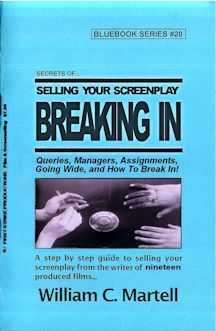
Over 400 Pages!
*** BREAKING IN BLUE BOOK *** - For Kindle!
Should really be called the BUSINESS BLUE BOOK because it covers almost everything you will need to
know for your screenwriting career: from thinking like a producer and learning to speak their language,
to query letters and finding a manager or agent, to making connections (at home and in Hollywood) and
networking, to the different kinds of meetings you are will have at Studios, to the difference between
a producer and a studio, to landing an assignment at that meeting and what is required of you when you
are working under contract, to contracts and options and lawyers and... when to run from a deal!
Information you can use *now* to move your career forward! It's all here in the Biggest Blue Book yet!
Print version was 48 pages, Kindle version is over 400 pages!
$4.99 - and no postage!
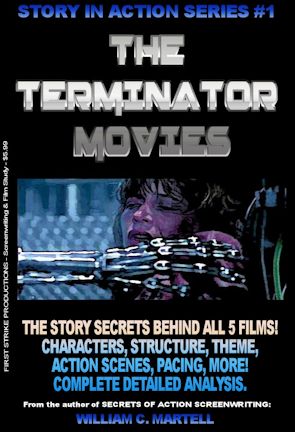
Over 240 pages!
*** THE TERMINATOR MOVIES *** - For Kindle!
He's back! The release of "Terminator: Genisys" (now on BluRay) is set to begin a new trilogy in
the Terminator story... 31 years after the first film was released. What draws us to these films about
a cybernetic organism from the future sent back in time? Why is there a new proposed trilogy every few
years? This book looks at all five Terminator movies from a story standpoint - what makes them work
(or not)? What are the techniques used to keep the characters and scenes exciting and involving? How
about those secret story details you may not have noticed? Containing a detailed analysis of each of
the five films so far, this book delves into the way these stories work... as well as a complete list of
box office and critical statistics for each film. This book is great for writers, directors, and just
fans of the series.
Only $3.99 - and no postage!

NEW BUT OLD!
*** VINTAGE #1: HOW TO WRITE PHOTOPLAYS *** - For Kindle!
***
Screenwriting books have been around as long as films have. This series reprints vintage screenwriting books with a new introduction and history, plus new articles which look at how these lessons from almost 100 years ago apply to today’s screenplays. Anita Loos book is filled with information which still applies.
In addition to the full text of the original book, you get the full screenplay to Miss Loos' hit THE LOVE EXPERT, plus several new articles on the time period and women in Hollywood.
Only $2.99 - and no postage!
MY BLOG!
 SCRIPT SECRETS STORE
Start The Day The Coffee Way!
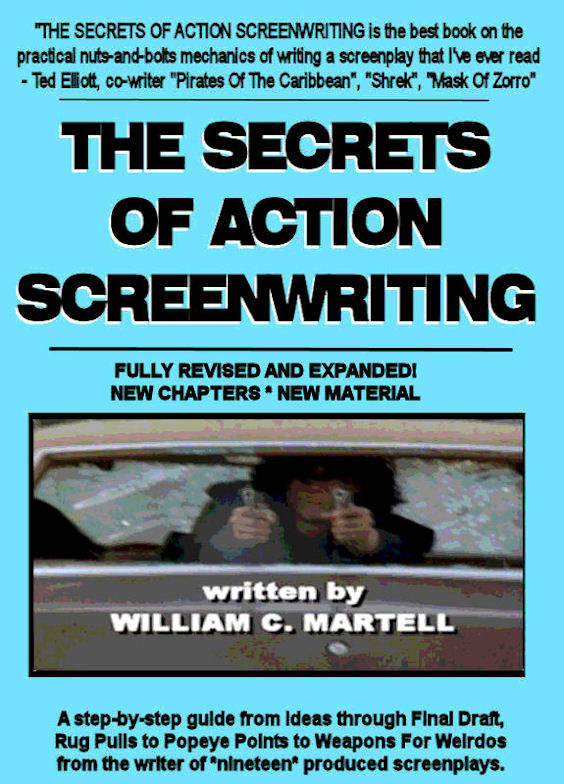
MAKES A GREAT GIFT!
*** THE SECRETS OF ACTION SCREENWRITING *** - For Kindle!
*** THE SECRETS OF ACTION SCREENWRITING *** - For Nook!
Why pay $510 for a used version of the 240 page 2000 version that used to retail for $21.95? (check it out!) when
you can get the NEW EXPANDED VERSION - over 500 pages - for just $9.99? New chapters, New examples, New techniques!
"SECRETS OF ACTION SCREENWRITING is the
best book on the practical nuts-and-bolts mechanics of writing a screenplay I've ever read."
- Ted Elliott, co-writer of MASK OF ZORRO, SHREK, PIRATES OF THE CARIBBEAN and the sequels (with Terry Rossio). (ie; 4 of the top 20 Box Office Hits Of ALL TIME.)
Only $9.99 - and no postage!
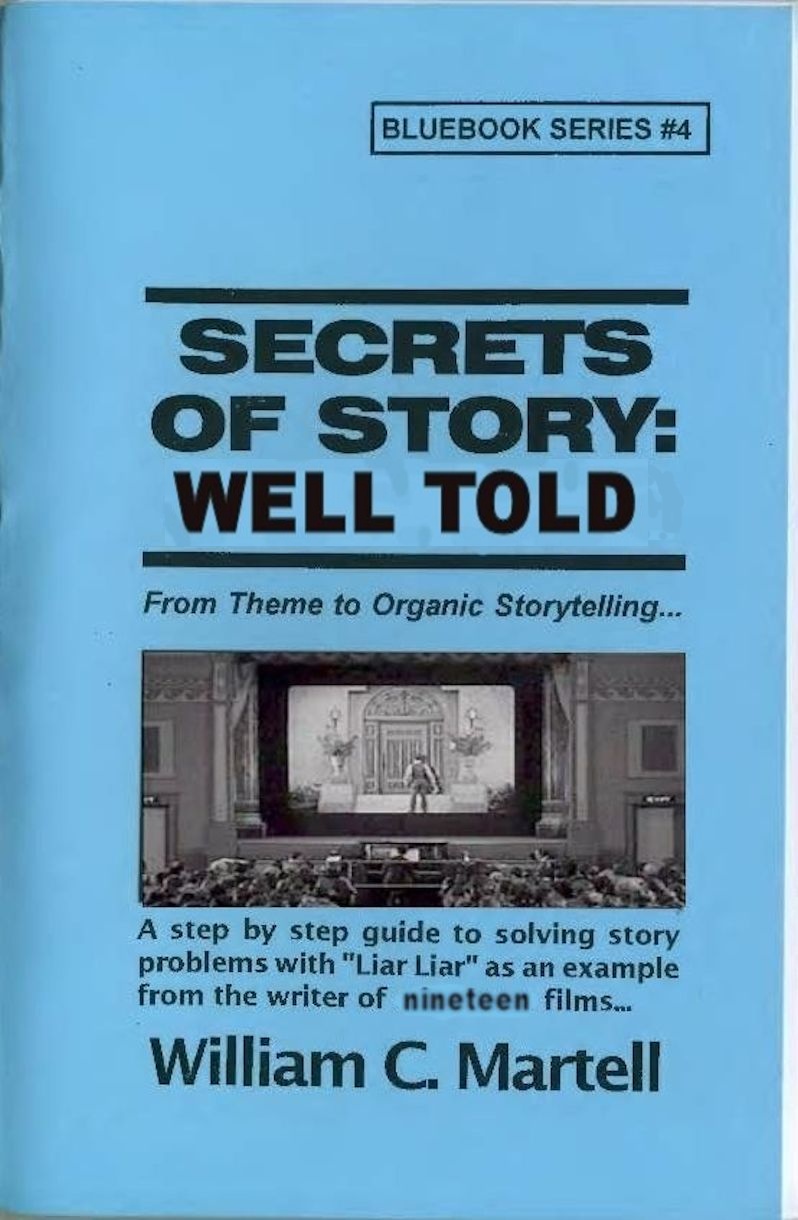
HOW YOU TELL IT
*** STORY: WELL TOLD *** - For Kindle!
This book takes you step-by-step through the construction of a story... and how to tell a story well, why Story always starts with character... but ISN'T character, Breaking Your Story, Irony, Planting Information, Evolving Story, Leaving No Dramatic Stone Unturned, The Three Greek Unities, The Importance Of Stakes, The Thematic Method, and how to create personal stories with blockbuster potential. Ready to tell a story?
Print version was 48 pages, Kindle version is over 85,000 words - 251 pages!
Only $4.99 - and no postage!
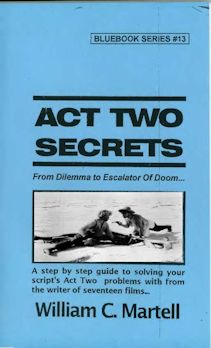
STUCK IN THE MIDDLE?
*** ACT TWO SECRETS *** - For Kindle!
Expanded version with more techniques to help you through the desert of Act Two! Subjects Include: What Is Act Two? Inside Moves, The 2 Ps: Purpose & Pacing, The 4Ds: Dilemma, Denial, Drama and Decision, Momentum, the Two Act Twos, Subplot Prisms, Deadlines, Drive, Levels Of Conflict, Escalation, When Act Two Begins and When Act Two Ends, Scene Order, Bite Sized Pieces, Common Act Two Issues, Plot Devices For Act Two, and dozens of others. Over 67,000 words (that's well over 200 pages) of tools and techniques to get you through the desert of Act Two alive! Print version was 48 pages, Kindle version is over 208 pages!
Only $4.99 - and no postage!
GREAT SUPPORTING CHARACTERS!
*** SUPPORTING CHARACTER SECRETS *** - For Kindle! (Exclusive)
Expanded version with more techniques to flesh out your Supporting Characters and make them individuals. Using the hit movie BRIDESMAIDS as well as other comedies like THE HANGOVER and TED and HIGH FIDELITY and
40 YEAR OLD VIRGIN and many other examples we look at ways to make your Supporting Characters come alive on the page.
Print version was 48 pages, Kindle version is around 170 pages!
Only $4.99 - and no postage!
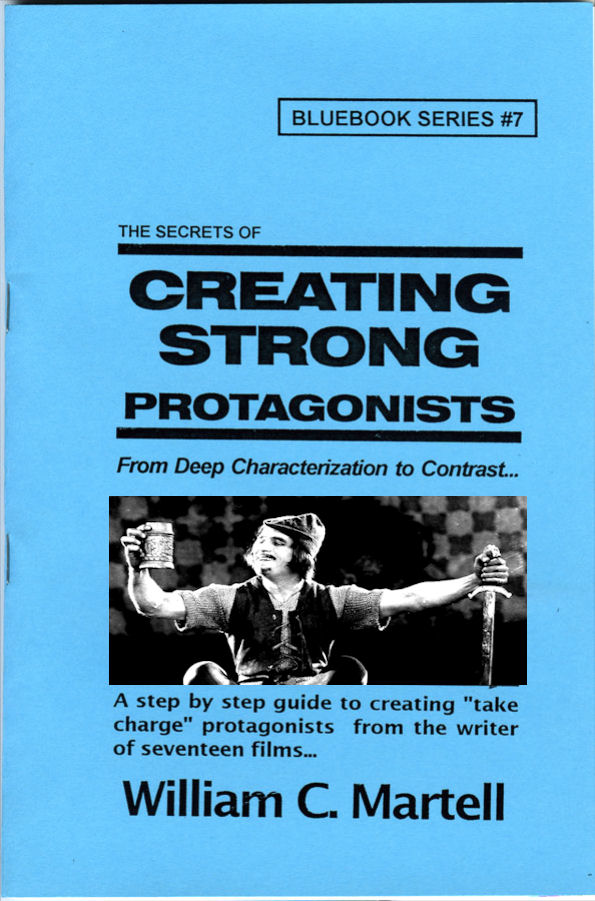
THAT STAR PART!
*** CREATING STRONG PROTAGONISTS *** - For Kindle!
*** CREATING STRONG PROTAGONISTS *** - For Nook!
Expanded version with more ways to create interesting protagonists! A step-by-step guide to creating "take charge" protagonists. Screenplays are about characters in conflict... characters in emotional turmoil... Strong three dimensional protagonists who can find solutions to their problems in 110 pages. But how do you create characters like this? How do you turn words into flesh and blood? Character issues, Knowing Who Is The Boss, Tapping into YOUR fears, The Naked Character, Pulp Friction, Man With A Plan, Character Arcs, Avoiding Cliche People, Deep Characterization, Problem Protagonists, 12 Ways To Create Likable Protagonists (even if they are criminals), Active vs. Reactive, The Third Dimension In Character, Relationships, Ensemble Scripts, and much, much more. Print version is 48 pages, Kindle version is once again around 205 pages!
Only $4.99 - and no postage!
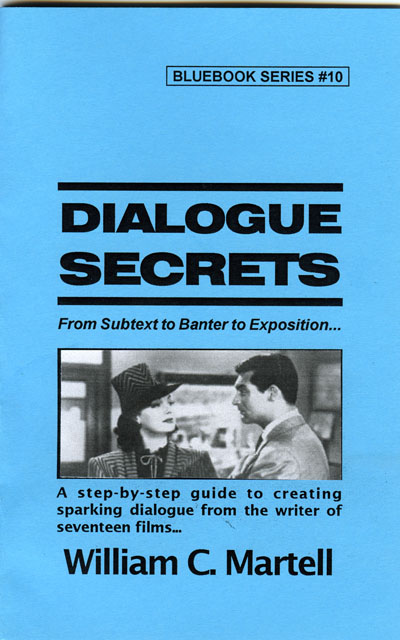
THEY SOUND DIFFERENT!
*** DIALOGUE SECRETS *** - For Kindle!
*** DIALOGUE SECRETS *** - For Nook!
Expanded version with more ways to create interesting dialogue! How to remove bad dialogue (and what *is* bad dialogue), First Hand Dialogue, Awful Exposition, Realism, 50 Professional Dialogue Techniques you can use *today*, Subtext, Subtitles, Humor, Sizzling Banter, *Anti-Dialogue*, Speeches, and more. Tools you can use to make your dialogue sizzle! Special sections that use dialogue examples from movies as diverse as "Bringing Up Baby", "Psycho", "Double Indemnity", "Notorious", the Oscar nominated "You Can Count On Me", "His Girl Friday", and many more! Print version is 48 pages, Kindle version is over 160 pages!
Only $4.99 - and no postage!

Use your creative energy to focus on the content; let Final Draft take care of the style. Final Draft is the number-one selling application specifically designed for writing movie scripts, television episodics and stage plays. Its ease-of-use and time-saving features have attracted writers for almost two decades positioning Final Draft as the Professional Screenwriters Choice. Final Draft power users include Academy, Emmy and BAFTA award winning writers like Oliver Stone, Tom Hanks, Alan Ball, J.J. Abrams, James Cameron and more.
* * * Buy It!
|
|
|
|
|
SECRETS OF ACTION SCREENWRITING
|
|
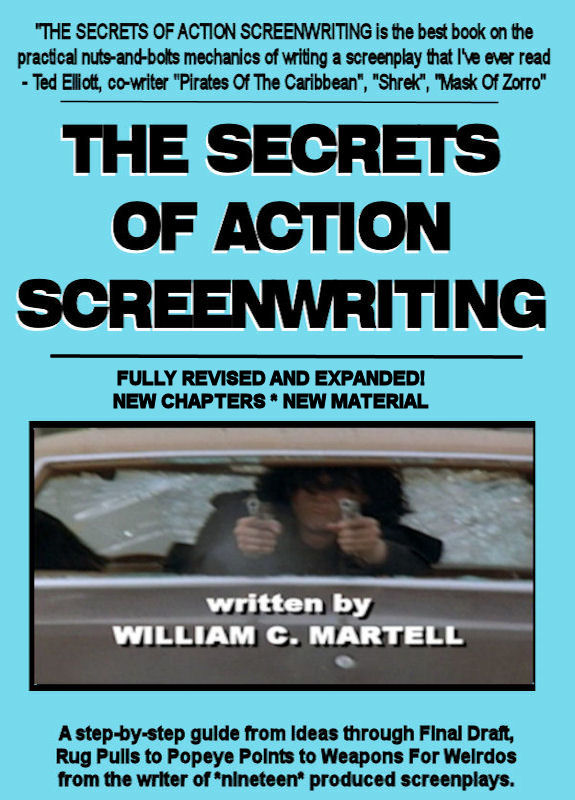 IT'S BACK! SECRETS OF ACTION SCREENWRITING
Over 460 pages packed with tips and techniques.
How to
write a plot twist,
the four kinds of suspense (and how to create it), reversals, ten ways to invent new action scenes, secrets and lies,
creating the ultimate
villain, five kinds of love interests, MORE! CLICK HERE!
|
|
CLASSES ON CD
|
|
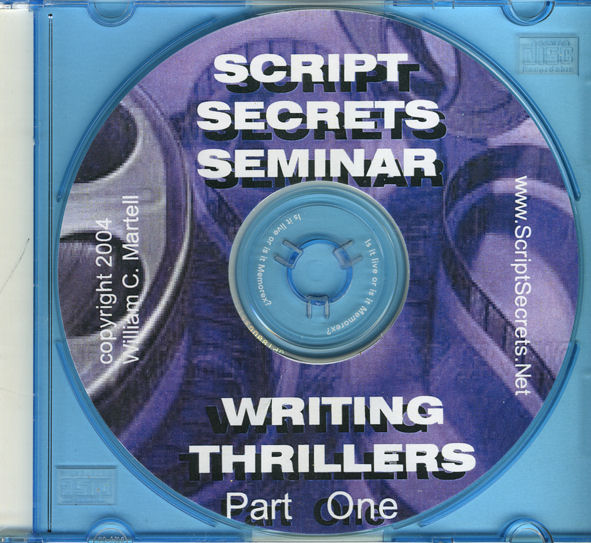 CLASSES ON CD! Take a class on CD! GUERRILLA MARKETING - NO AGENT? NO PROBLEM! and WRITING THRILLERS (2 CDs). Full length classes on CD. Now Available: IDEAS & CREATIVITY, WRITING HORROR, WRITING INDIE FILMS, more!
Take classes on CD!
|
|
MY OTHER SITES
|
|
B MOVIE WORLD
Cult Films, Exploitation, Bikers & Women In Prison, Monster Movies.
FIRST STRIKE PRODUCTIONS
Producing my own scripts, investment possibilities, pipe dreams.
|
|
NAKED SCREENWRITING CDs
|
|
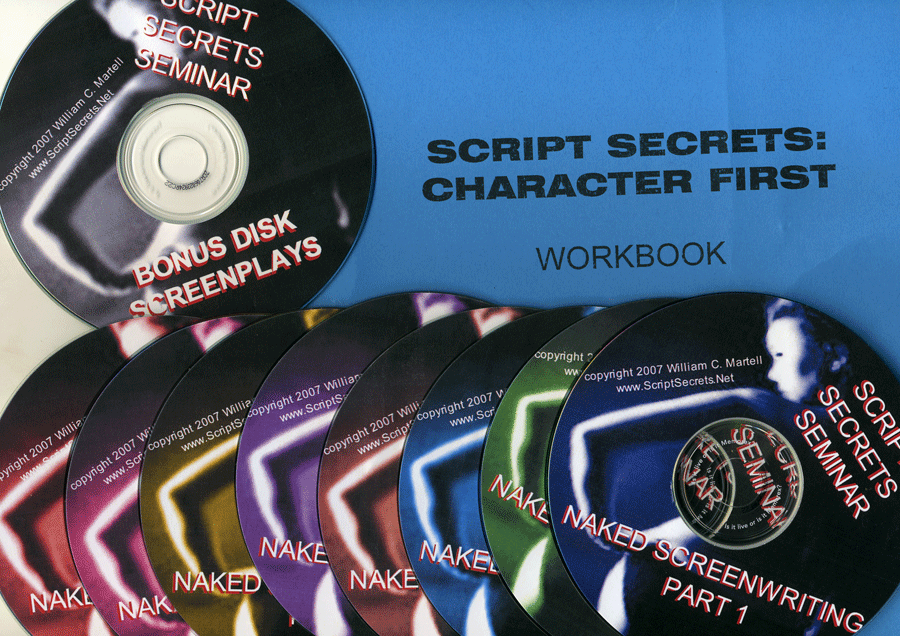 The NAKED SCREENWRITING CLASS ON CD!
The 2001 London Class on 8 CDs! Recorded *live* the morning after the Raindance Film Festival
wrapped. The two day class on 8CDs, plus a workbook, plus a bonus CD.
The NAKED SCREENWRITING CLASS ON CD!
The 2001 London Class on 8 CDs! Recorded *live* the morning after the Raindance Film Festival
wrapped. The two day class on 8CDs, plus a workbook, plus a bonus CD.
The 2 Day Class on CD!
|
|
BOOKSTORE
|
|
Every screenwriting book in the world!
SCREENWRITER'S BOOKSTORE
In Association With Amazon.com
From the latest screenwriting book to
guides for finding agents and producers... all with at the
Amazon.com discount!
|
|
ONLINE CLASSES
|
|
|
SCRIPT SECRETS STORE
|
|
SCRIPT SECRETS STORE
From Typing Monkey coffee cups to messenger bags to T shirts - everything a screenwriter needs to look sharp while working on that Oscar nomination!
Get your Script Secrets Coffee Cup today!
|
|
BILL'S CORNER
|
|
My
nineteen produced films, interviews with me in magazines,
several sample scripts, my available scripts list... And MORE!
...............................BILL'S CORNER
Available Scripts
|
|
E BOOKS PAGE
|
|
 E BOOKS: New Blue Books and Novelettes!
I am expanding all of the Blue Books from around 44 pages of
text to around 200 pages! Some are over 250 pages! See what is availabale and what is coming soon!Also, I've been writing Novelletes and there
will soon be novels.
E BOOKS: BLUE BOOKS & NOVELLETES
|
|
BOOKLETS & PRODUCTS
|
|
 FIRST STRIKE BLUE BOOKS
Each Blue Book is 48
pages and focuses on a different aspect of screenwriting. Dialogue. Visual Storytelling. Your First Ten Pages. Act 2 Booster. Protagonists. Great Endings.
Seventeen Blue Books now available!
THE SECRETS OF ACTION SCREENWRITING OUT OF PRINT!
|
|
|
|
|